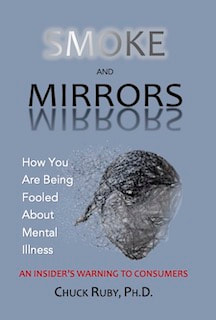
You are being fooled about mental illness
It's not illness
It's not dysfunction
It's not biological
It's not medical
It's not chemical
...
It. Is. Meaningful.
|
8/18/2022 0 Comments Therapist knows best?I just realized is has been two months since my last blog entry. At that moment of realization, I said to myself, "I should write another!" But then I noticed that I just did what my clients often do. They continually wonder and talk about what they should do and ask me frequently the same question: "You're the expert here. What should I do?"
Frankly, I have no idea. In my view, wondering what one should do, what one needs to do, what one ought to do, what one must do, or what one has to do, merely indicates that the person doesn't want to do it, and instead, that somebody else wants them to do it. This might be a significant other, a parent, a friend, or just society in general. Otherwise, wouldn't they just say they are going to do it? Now, I realize we talk in this imprecise sort of way colloquially. But the problem is that doing so has a great impact on our sense of being free or coerced in life. We constantly go back and forth between split off parts of our self with one part trying to convince the other part what needs to be done. This is quite an odd phenomenon, given that there is only one of us, and if we are trying to convince ourselves of something, who is the one doing the convincing and who is the one being convinced? Which is the one who has the market on "the right way of doing things." How do we know when a success occurs in this argument: when the convincer wins or when the one being convinced wins? This brings us to the solution to this conundrum. I propose that a far more effective and fulfilling way of approaching life is to focus on our desires and preferences, not on what we should do. But I think there is a general hesitation to do so because most of us do not have faith in ourselves and in many situations believe we have an obligation to justify our desires to someone else. But this is impossible. We might be in a position to explain our desires and preferences to others, but there is no way to justify them that carries any kind of absolute authority. Even when we resort to quoting secular or religious authority, we are not justifying. This is because the authority we choose to quote is based completely on our desires. We can't get away from this fundamental reality that personal and individual desire is the primary motivating factor for choices. So, this brings us back to the role of a therapist and telling you what you should do. We just don't know and that is because we are not the experts in individual desires. You are the expert in your desires. Trust them, listen to yourself, listen to your gut. Of course, I am not suggesting a "free-for-all" way of life where are we all just do whatever we want (although to get philosophical about this that is exactly what we do – but we won't go there for now). Instead, we desire to do things in the context of living in a relational world where many, many other people are also desiring to do things and there is inevitable conflict among them. So, as a simple example, I might desire to drive 90 miles an hour in a 50 mile an hour zone. But I recognize that fulfilling that initial desire would be dangerous to others. Given that consequence of speeding, I realize I don't actually desire to do that so I slow down. Life is like a jigsaw puzzle, it consists of many interlocking pieces and you can't take the puzzle unless you take all the pieces. The puzzle of speeding has a piece reserved for danger. One can't speed without also being dangerous. We are constantly assessing our desires and all the consequences that go with the completion of those desires. It is when we notice negative consequences like the speeding example above that we recognize we really don't want to do it. And that, my friends, is what we should do!
0 Comments
Leave a Reply. |
ArchivesCategories |

 RSS Feed
